INTRODUCTION
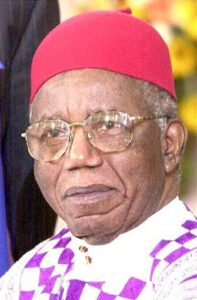
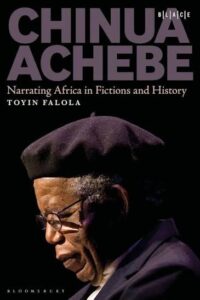
Chinua Achebe was a renowned Nigerian novelist, poet, critic, and professor widely regarded as one of the most influential African writers of the 20th century. He is best known for his groundbreaking novel Things Fall Apart, which has become one of the most widely read books in African literature. Achebe’s work reshaped global perceptions of Africa by presenting authentic African voices, cultures, and experiences. His legacy continues to inspire writers, scholars, and readers around the world.
Early Life and Background
Chinua Achebe was born on November 16, 1930, in Ogidi, a town in present-day Anambra State, Nigeria. He was born into a Christian family; his father, Isaiah Okafor Achebe, was a teacher and catechist, while his mother, Janet Anaenechi Achebe, was known for her storytelling skills.
Growing up in a colonial environment, Achebe experienced both traditional Igbo culture and Western influences. This dual exposure played a significant role in shaping his worldview and later influenced his writing. He developed an early interest in storytelling, inspired by both his mother’s folktales and the literature he encountered in school.
Education
Chinua Achebe began his education at local schools in Ogidi before attending Government College, Umuahia, one of Nigeria’s most prestigious secondary schools. There, he excelled academically and developed a strong interest in literature, reading works by European authors as well as emerging African writers.
He later gained admission to University College, Ibadan (now the University of Ibadan), where he initially studied medicine before switching to English, history, and theology. This change allowed him to focus on his passion for writing and storytelling.
During his university years, Achebe began writing short stories, essays, and radio scripts. His experiences at Ibadan helped him refine his literary voice and develop a critical perspective on colonial literature and its portrayal of Africa.
Early Career
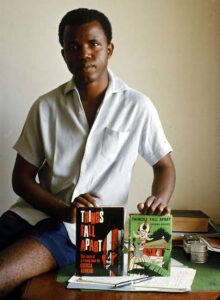
After graduating in 1953, Chinua Achebe joined the Nigerian Broadcasting Corporation (NBC), where he worked as a producer and broadcaster. His role at NBC exposed him to various aspects of media, communication, and storytelling.
While working at the broadcasting corporation, Achebe continued to write and develop his literary career. He became determined to tell African stories from an authentic perspective, challenging the stereotypes and misrepresentations found in colonial literature.
Breakthrough with Things Fall Apart
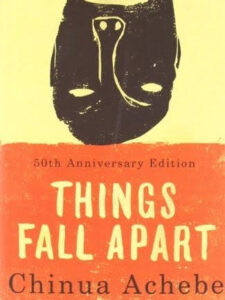
Chinua Achebe achieved international recognition with the publication of his first novel, Things Fall Apart, in 1958. The novel tells the story of Okonkwo, a respected Igbo leader, and explores the impact of colonialism and missionary activity on traditional African society.
Things Fall Apart was groundbreaking for several reasons:
- It presented African culture and traditions from an insider’s perspective
- It challenged Western stereotypes about Africa
- It used simple yet powerful language accessible to a global audience
- The novel became a global success, translated into dozens of languages, and has sold millions of copies worldwide. It is widely regarded as one of the greatest novels ever written and a cornerstone of African literature.
 Literary Career and Major Works
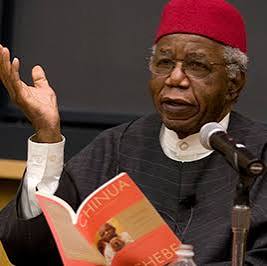
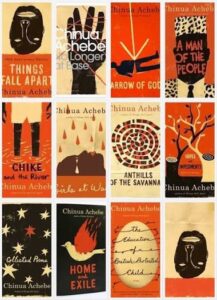
Following the success of Things Fall Apart, Achebe continued to write influential novels and essays that explored themes of culture, identity, colonialism, and post-colonial challenges. His major works include:
- No Longer at Ease (1960)
- Arrow of God (1964)
- A Man of the People (1966)
- Anthills of the Savannah (1987)
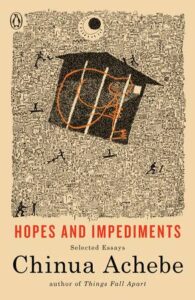
In addition to novels, Achebe wrote short stories, poetry, and essays. His essay collections, such as Hopes and Impediments, addressed issues of culture, politics, and literature.
Achebe also played a significant role as an editor, helping to promote African writers through the African Writers Series, which brought African literature to a global audience.
Role During the Nigerian Civil War
During the Nigerian Civil War (1967–1970), Chinua Achebe supported the Biafran cause and served as an ambassador for the region. He traveled internationally to raise awareness about the humanitarian crisis caused by the war.
The war had a profound impact on Achebe’s life and writing. It influenced his later works, particularly his reflections on politics, leadership, and the challenges facing post-independence African nations.
Academic Career
Chinua Achebe had a distinguished academic career, teaching at various universities in Nigeria, the United States, and other countries. He held positions at institutions such as:
- University of Nigeria, Nsukka
- University of Massachusetts
- Brown University
As a professor, Achebe inspired students and scholars, encouraging critical thinking and the study of African literature from an authentic perspective. His contributions to academia helped establish African literature as a respected field of study worldwide.
Awards and Recognition
Chinua Achebe received numerous awards and honors for his contributions to literature and culture. These include:
- The Man Booker International Prize (2007)
- The Commonwealth Poetry Prize
- The Nigerian National Merit Award
- Several honorary doctorates from universities around the world
 Although he was widely considered a strong candidate for the Nobel Prize in Literature, he never received it. Nevertheless, his impact on global literature remains immense.
Personal Life
Chinua Achebe married Christie Okoli in 1961, and they had children together. His family life was marked by strong values, cultural pride, and intellectual engagement.
In 1990, Achebe was involved in a car accident that left him paralyzed from the waist down. Despite this challenge, he continued to write, teach, and engage in public discourse, demonstrating resilience and determination.
Philosophy and Influence
Achebe believed strongly in the importance of storytelling as a means of preserving culture and shaping identity. He emphasized that Africans should tell their own stories rather than rely on external narratives.
His work challenged colonial perspectives and encouraged a more balanced and accurate understanding of African societies. Achebe’s influence extends beyond literature to areas such as education, politics, and cultural identity.
Later Years and Death
In his later years, Chinua Achebe continued to write and speak on issues related to Nigeria, Africa, and global society. He remained an influential voice in discussions about governance, corruption, and cultural identity.
Chinua Achebe passed away on March 21, 2013, in Boston, Massachusetts, United States, at the age of 82. His death was widely mourned across the world, with tributes highlighting his immense contributions to literature and culture.
Legacy and Impact
Chinua Achebe’s legacy is profound and enduring. He is often referred to as the “father of modern African literature” because of his pioneering role in shaping the literary landscape of the continent.
His legacy includes:
- Revolutionizing African literature with authentic storytelling
- Challenging stereotypes and promoting cultural understanding
- Inspiring generations of writers, scholars, and readers
- Establishing African literature as a global force
- Today, Achebe’s works are studied in schools and universities around the world, and his influence continues to shape contemporary literature.
Conclusion
Chinua Achebe was a visionary writer, scholar, and cultural ambassador whose work transformed the way Africa is represented in literature. From his early life in Ogidi to his global recognition as a literary icon, his journey reflects creativity, resilience, and a commitment to truth.
Through his novels, essays, and academic contributions, Achebe gave a voice to African experiences and challenged the world to see Africa through a more accurate and respectful lens. His legacy remains a source of inspiration for generations, ensuring that his impact on literature and culture will never be forgotten.

Be the first to comment