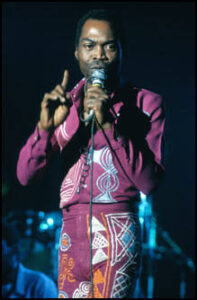
Fela Anikulapo Kuti, famously known as Fela Kuti, was a legendary Nigerian musician, composer, and political activist. He is widely recognized as the pioneer of Afrobeat, a revolutionary music genre that blends traditional African rhythms with jazz, funk, highlife, and soul. Fela’s influence went beyond music; he was a fearless critic of political corruption and a vocal advocate for human rights and social justice. His life, filled with creativity, defiance, and activism, made him an icon in Nigeria and a global cultural figure whose legacy continues to inspire musicians, activists, and thinkers worldwide.
Early Life and Background
Fela Kuti was born on October 15, 1938, in Abeokuta, Ogun State, Nigeria. He was born into a family deeply involved in education, social reform, and political activism. His father, Chief Oludotun Ransome-Kuti, was a Protestant minister and a school principal, while his mother, Funmilayo Ransome-Kuti, was a renowned feminist, educator, and activist who fought for women’s rights and against colonial taxation policies.
From an early age, Fela was exposed to political discussions and social issues. His mother’s activism, particularly her efforts to fight for equality and social justice, had a profound influence on him, shaping his later worldview. Fela was deeply aware of inequality, injustice, and corruption from a young age, and these themes would become central to his music and activism.
Growing up in a culturally rich environment, Fela developed an early appreciation for Yoruba traditions and African history. His upbringing combined strict discipline with exposure to arts and music, nurturing both his intellectual and creative abilities.
Education
Fela began his formal education in Abeokuta, attending primary and secondary schools. His interest in music emerged early, and he was skilled in piano, percussion, and other musical instruments.
In 1958, Fela moved to London, United Kingdom, to study music at the Trinity College of Music. There, he learned classical piano and became proficient in saxophone and guitar. During his time in London, Fela was introduced to jazz, funk, and African-American musical styles. He also became exposed to political thought, especially Pan-Africanist ideas and anti-colonial movements.
While in London, Fela formed a band called Koola Lobitos, performing jazz and highlife music. He also became influenced by the Black cultural renaissance and the civil rights movement, which shaped his political consciousness. His time in London helped him blend African rhythms with Western musical forms—a fusion that would later define Afrobeat.
Early Career and Return to Nigeria
Fela Kuti returned to Nigeria in the early 1960s, bringing with him a unique musical vision. He initially performed with the Koola Lobitos band, which played jazz and highlife. However, he gradually developed a distinct style that incorporated traditional Yoruba rhythms, African percussion, jazz improvisation, and politically charged lyrics.
Fela’s music was revolutionary. Unlike other artists of the time, he used music as a platform to challenge political corruption, social inequality, and military oppression. His lyrics were bold and provocative, often directly criticizing those in power.
He became known for long, intricate performances featuring extended instrumental jams, horn sections, and call-and-response vocals. Fela’s concerts were not just musical events—they were gatherings for social commentary and resistance.
Afrobeat and Musical Innovation
Fela Kuti is best known as the pioneer of Afrobeat, a genre that combines African rhythms with jazz, funk, and highlife. Afrobeat is characterized by:
Polyrhythmic percussion and drumming patterns
Horn sections inspired by jazz
Extended instrumental improvisation
Lyrics addressing social and political issues
Through Afrobeat, Fela Kuti created a platform for social commentary and activism. His music became synonymous with resistance, challenging corruption, military rule, and societal injustice.
Some of his most influential songs include:
Zombie (1976) – a satirical critique of the Nigerian military
Water No Get Enemy (1975) – reflecting social and spiritual themes
Gentleman (1973) – addressing cultural identity and colonial influence
Sorrow, Tears, and Blood (1977) – highlighting government oppression
Fela’s Afrobeat style continues to influence musicians worldwide, from contemporary African artists to international bands who incorporate elements of his rhythms, horn sections, and politically conscious lyrics.
Political Activism
Fela Kuti was not only a musician but also a political activist. He used his music to expose government corruption, police brutality, and social injustice in Nigeria. His lyrics often criticized military rulers and called for freedom, accountability, and human rights.
In 1978, he declared his Lagos compound, Kalakuta Republic, independent from the Nigerian state, symbolizing resistance to government oppression. Kalakuta became a commune where musicians, family members, and activists lived and worked, producing music and advocating for social change.
Fela faced frequent harassment from the Nigerian military and government. His compound was raided multiple times, and he was imprisoned several times for his activism. In 1977, one of the most tragic events in his life occurred when government soldiers raided Kalakuta and severely beat his mother, Funmilayo Ransome-Kuti. She later died from the injuries sustained, deepening Fela’s determination to fight injustice.
Despite these challenges, Fela Kuti remained undeterred. He continued to perform, write music, and speak out against oppression, becoming a symbol of courage and resistance for millions of Nigerians.
Personal Life
Fela Kuti was known for his vibrant and unconventional personal life. He had multiple wives at different times and fathered numerous children. He embraced a lifestyle that challenged societal norms, reflecting his broader rejection of authority and conformity.
Fela’s personality was bold, flamboyant, and unapologetically authentic. He was known for his fearless approach to life, his charisma on stage, and his ability to captivate audiences with his music and message.
International Recognition
Fela Kuti’s impact extended far beyond Nigeria. He performed internationally, including in Europe, the United States, and Africa, bringing Afrobeat to global audiences. His music influenced artists across genres, from jazz and funk to hip-hop and world music.
Fela’s activism and musical genius earned him recognition as one of the most important cultural figures of the 20th century. His work was celebrated in documentaries, books, and stage productions, including the acclaimed Broadway musical Fela!, which introduced his life and music to a global audience.
Later Career and Death
Fela Kuti continued to produce music and perform until the later years of his life. His health declined due to complications from AIDS, which he contracted in the early 1990s.
Fela Kuti passed away on August 2, 1997, at the age of 58. His death marked the end of an era, but his legacy lives on through his music, activism, and the ongoing work of his family, particularly his sons Femi Kuti and Seun Kuti, who continue to perform Afrobeat and promote their father’s vision.
Legacy and Influence
Fela Kuti’s legacy is vast and enduring. He transformed African music, creating a globally recognized genre that continues to inspire musicians worldwide. He also demonstrated that music could be a powerful tool for social change.
Key aspects of his legacy include:
Pioneering Afrobeat: Fela created a music style that combined African rhythms, jazz, and funk with socially conscious lyrics.
Political Activism: Through his music and lifestyle, Fela advocated for human rights, democracy, and freedom of expression.
Cultural Pride: He celebrated African identity, traditions, and social values in his work.
Influence on Future Generations: Artists worldwide continue to draw inspiration from his music, activism, and uncompromising spirit.
Fela Kuti remains a symbol of courage, creativity, and resistance, inspiring generations to fight injustice and embrace African culture with pride.
Awards and Recognition
Although often controversial during his lifetime, Fela Kuti has received significant posthumous recognition. His life and work have been honored through:
Documentaries and films exploring his life and activism
Musical tributes and stage productions, including Fela!
Influence on global music and Afrobeat’s continued popularity
Academic studies on his contribution to music, culture, and political thought
Conclusion
Fela Kuti was more than a musician; he was a revolutionary who challenged authority, corruption, and social injustice through art. From his early life in Abeokuta to international recognition, his journey reflects creativity, courage, and an unyielding commitment to justice.
Fela’s music, activism, and vision continue to inspire the world. He remains a legendary figure in the history of African music and a powerful symbol of resistance, cultural pride, and social change. His legacy endures through his recordings, his family, and the countless artists and activists influenced by his life and work.

Be the first to comment