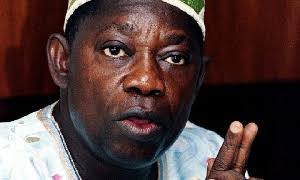
INTRODUCTION Chief Moshood Kashimawo Olawale Abiola, popularly known as M.K.O. Abiola, was one of Nigeria’s most influential businessmen, philanthropists, politicians, and democracy activists. He is widely remembered for winning the June 12, 1993 presidential election, which is considered one of the freest and fairest elections in Nigeria’s history. His life was marked by remarkable achievements in business, education, sports, journalism, philanthropy, and politics.
Today, M.K.O. Abiola is celebrated as a symbol of democracy and national unity in Nigeria. His sacrifices contributed significantly to the restoration of democratic governance in the country.
Early Life and Background
Moshood Kashimawo Olawale Abiola was born on August 24, 1937, in Abeokuta, Ogun State, Nigeria. He was born into a modest Muslim family and was the twenty-third child of his father, Salawu Abiola.
The name “Kashimawo” was given to him because his parents believed that after losing several children, this child would survive. The name means “Let us wait and see.”
Growing up, Abiola faced financial challenges. To support himself and his family, he engaged in various small businesses as a young boy. Despite these difficulties, he remained committed to his education and demonstrated exceptional intelligence.
Education
M.K.O. Abiola began his primary education at African Central School, Abeokuta. He later attended Baptist Boys’ High School, Abeokuta, where he excelled academically.
After completing his secondary education, he gained admission to study at the University of Glasgow in Scotland, where he earned a degree in Accountancy. His education abroad broadened his knowledge and prepared him for a successful career in business and administration.
Abiola’s academic achievements laid the foundation for his future success as one of Africa’s most respected entrepreneurs.
Career and Business Success
After returning to Nigeria, M.K.O. Abiola worked in various organizations before joining the telecommunications company International Telephone and Telegraph Corporation (ITT).
Through hard work, dedication, and outstanding leadership skills, he rose through the ranks and eventually became the Vice President for Africa and the Middle East at ITT. This achievement made him one of the highest-ranking African executives in a multinational corporation at the time.
His success in business extended beyond telecommunications. Abiola invested in several sectors, including:
Publishing
Agriculture
Banking
Oil and gas
Aviation
Shipping
Manufacturing
He established and supported numerous companies, creating employment opportunities for thousands of Nigerians.
His business empire made him one of the wealthiest and most influential individuals in Africa during the 1980s and early 1990s.
Contributions to Journalism and Media
M.K.O. Abiola played an important role in the Nigerian media industry. He was the founder of Concord Newspapers, a media organization that included:
National Concord
Sunday Concord
African Concord
The newspapers became widely respected for reporting national and international issues. Through his media investments, Abiola promoted press freedom and public awareness.
The Concord Group became one of the most influential newspaper organizations in Nigeria during its time.
Philanthropy and Humanitarian Activities
One of the reasons many Nigerians admired M.K.O. Abiola was his generosity.
He donated millions of naira to:
Educational institutions
Religious organizations
Hospitals
Community development projects
Scholarship programs
His charitable activities reached people from different ethnic, religious, and social backgrounds.
Abiola supported both Muslim and Christian organizations, demonstrating his commitment to national unity and peaceful coexistence.
Many schools, mosques, churches, and community centers across Nigeria benefited from his donations.
His philanthropy earned him several traditional titles and national recognition.
Involvement in Sports Development
M.K.O. Abiola also contributed significantly to sports development in Nigeria.
He sponsored sporting competitions and supported football clubs and athletes. His investments helped promote sports as a tool for youth development and national unity.
His support for sports contributed to the growth of football and other athletic activities in Nigeria.
Political Career
Although Abiola was successful in business, he believed that public service was important for national development.
He became actively involved in politics and joined the Social Democratic Party (SDP) during Nigeria’s transition to democratic rule in the early 1990s.
Abiola’s political message focused on:
Poverty reduction
Economic growth
National unity
Job creation
Education
Infrastructure development
His popularity quickly spread across Nigeria because he appealed to people regardless of ethnic or religious differences.
The Historic June 12, 1993 Election
The most significant event in M.K.O. Abiola’s political career was the June 12, 1993 presidential election.
He contested under the platform of the Social Democratic Party (SDP) against Bashir Tofa of the National Republican Convention (NRC).
The election attracted national and international attention.
Abiola’s campaign slogan, “Hope ’93,” resonated with millions of Nigerians who desired democratic change and economic progress.
Results from various parts of the country showed that Abiola won widespread support across different regions, religions, and ethnic groups.
Election observers widely regarded the election as one of the freest and fairest in Nigerian history.
However, before the final official announcement of the results, the military government led by General Ibrahim Babangida annulled the election.
The annulment sparked nationwide protests and political unrest.
Struggle for Democracy
Following the annulment of the election, M.K.O. Abiola became a leading figure in Nigeria’s pro-democracy movement.
He insisted that the election results should be recognized and that the people’s mandate should be respected.
On June 11, 1994, Abiola publicly declared himself the lawful winner of the election and demanded the restoration of his mandate.
His actions intensified the struggle for democratic governance in Nigeria.
Many civil society groups, students, labor unions, and international organizations supported his position.
The demand for democracy became one of the most important political movements in Nigerian history.
Arrest and Detention
In June 1994, the military government arrested M.K.O. Abiola on charges related to treason.
He was detained for several years without assuming the presidency despite his electoral victory.
His detention attracted widespread criticism from:
Human rights organizations
Foreign governments
Democracy activists
International media organizations
Many Nigerians viewed him as a symbol of resistance against military rule.
Despite pressures and negotiations, Abiola remained committed to his demand for the recognition of the June 12 mandate.
Death
M.K.O. Abiola died on July 7, 1998, while still in detention.
His death occurred during a period of political transition following the death of General Sani Abacha.
The news of his death shocked Nigeria and attracted reactions from around the world.
Many Nigerians mourned him as a hero who sacrificed his freedom and ultimately his life in the pursuit of democracy.
Legacy
The legacy of M.K.O. Abiola remains significant in Nigeria’s political history.
His contributions include:
1. Symbol of Democracy
Abiola is widely recognized as a symbol of democratic struggle in Nigeria.
2. National Unity
His electoral success demonstrated that Nigerians could vote across ethnic and religious lines.
3. Philanthropy
His charitable works continue to inspire business leaders and philanthropists.
4. Economic Contributions
Through his businesses, he created jobs and contributed to economic development.
5. Press Freedom
His media investments strengthened journalism and public discourse.
National Recognition
In recognition of his role in Nigeria’s democratic journey, the Federal Government of Nigeria has honored M.K.O. Abiola in several ways.
In 2018, President Muhammadu Buhari officially recognized June 12 as Nigeria’s Democracy Day, replacing May 29.
Abiola was also posthumously awarded the Grand Commander of the Federal Republic (GCFR), one of Nigeria’s highest national honors.
This award is traditionally reserved for Nigerian presidents.
The recognition further cemented his place among Nigeria’s most important historical figures.
Family Life
M.K.O. Abiola was married to several wives and had many children. Among his well-known family members was Kudirat Abiola, who became a prominent democracy activist during the struggle to validate the June 12 election.
His family played an important role in supporting the pro-democracy movement during difficult political periods.
Conclusion
Chief Moshood Kashimawo Olawale Abiola was a remarkable Nigerian businessman, philanthropist, publisher, sports supporter, politician, and democracy advocate. From humble beginnings in Abeokuta, he rose to become one of Africa’s most influential figures. His victory in the June 12, 1993 presidential election and his unwavering commitment to democratic principles made him a national icon.
Although he never assumed the presidency, his sacrifices contributed significantly to Nigeria’s return to democratic governance. Today, M.K.O. Abiola is remembered as a champion of democracy, national unity, and public service whose legacy continues to inspire generations of Nigerians.
Be the first to comment